
When planning your dream sailing trip through Greece, it’s tempting to get swept up in the magic of it all — sparkling Aegean waters, lazy island lunches, ancient ruins, and wind in your sails. But before any of that magic becomes reality, there’s one thing you need to master: how to use a map of Greek islands to actually plan your route. Not just look at it — really use it.
Unlike other travel destinations where logistics are landlocked and simple, Greece offers an entire seascape of choices. It’s not one destination but dozens, each tucked inside one of several archipelagos. If you want your sailing trip to be smooth, memorable, and logistically sound, you need to understand how to interpret a map of Greece and its islands the way a sailor does: as a living, practical, decision-making tool.
This isn’t just about getting from point A to point B. It’s about choosing the right region, plotting doable daily legs, reading the wind, and matching your route to the type of yacht you’ll charter — whether it’s bareboat, skippered, or flotilla. Let’s dive deep into how to make your map the most important piece of your pre-trip planning toolkit.
Table of Contents
Why the Map Matters More Than You Think
If you’ve only ever seen Greece through the lens of a travel brochure or Instagram feed, you might think it’s one unified experience. But in reality, Greece is a sprawling maritime playground made up of over 6,000 islands and islets — only about 200 of which are inhabited — spread across multiple, distinct Greek island groups. Each region offers its own flavor of sailing, from the relaxed and verdant Ionian to the rugged and wind-whipped Cyclades.
Using a Greek islands map helps you go beyond dreaming. It helps you make decisions that align with your sailing skill level, trip duration, and comfort zone. For example, if you only have a week and want calm seas, plotting a route in the Cyclades — famous for the strong Meltemi winds — might be a recipe for frustration rather than fun. A map of Greece and islands gives you the bigger picture. It helps you anticipate not just what’s out there but how to realistically get there.
This kind of map also reveals the relationships between sailing territories. Zooming out helps you see how different island groups cluster together, where major crossing zones lie, and where natural wind corridors form. If your whole sailing plan fits inside a screenshot on your phone, you’re probably thinking too small. Real sailing happens on a regional scale, and a paper or digital Greek islands sailing map will help you understand how distances, winds, and geography interact.
Know Your Island Groups
Understanding the layout of the Greek island clusters is key to planning a route that feels cohesive and enjoyable. Instead of randomly dotting your route across the Aegean or Ionian seas, a well-read map of Greek islands lets you concentrate your trip within a single, rich island group — reducing stress, travel time, and fuel burn.
Here’s a breakdown of the major Greek island groups you’ll see on any good sailing map:
Cyclades
Think postcard-perfect. These are the iconic islands you’ve seen in films and magazines: whitewashed houses, blue-domed churches, and dramatic cliffs. But they’re also exposed and notorious for the powerful Meltemi winds in July and August. Sailing here means faster passages and open-sea conditions. Great for adventure seekers and experienced crews, but beginners might find it daunting. A Greek islands map will show how spread out the Cyclades are — and why route planning here requires wind awareness and caution.
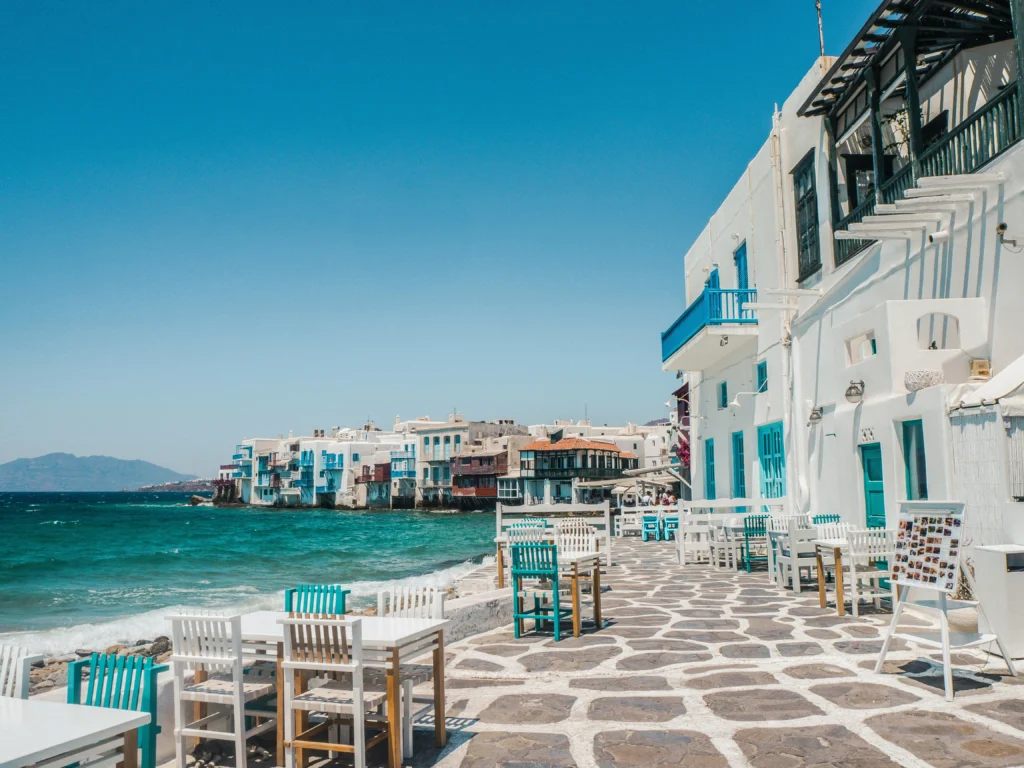
Photo by Johnny Africa on Unsplash
Ionian Islands
Located on Greece’s western coast, the Ionian offers a completely different vibe: calm waters, lush green landscapes, and short, easy hops between islands. Perfect for first-time sailors or family flotillas. If you check a Greek island hopping map, you’ll see how close Lefkada, Ithaca, Kefalonia, and Meganisi are — making it possible to sail a circular or figure-eight route within a week without stress.
Dodecanese
Stretching along the eastern edge of the Aegean, close to the Turkish coast, the Dodecanese are dotted with castles, monasteries, and ancient ruins. Sailing here can involve longer legs between islands, but the rewards are great: quiet harbors, medieval towns like Rhodes and Kos, and unspoiled anchorages.
Saronic Gulf
Just off the coast of Athens, the Saronic is ideal for those who want a manageable, culturally rich 7-day itinerary. With charming islands like Hydra, Poros, and Spetses just a few hours apart, it’s the go-to region for short charters and bareboat trips. Your map of Greek islands will show a tight-knit cluster with protected bays and convenient provisioning spots.
Sporades
Tucked away in the northern Aegean, these lesser-known islands are forested, peaceful, and wonderfully uncrowded. With steady winds and sheltered waters, the Sporades are ideal for a relaxed route and authentic island-hopping away from the crowds.
Using a Greek Island-Hopping Map to Build the Right Route
It’s easy to look at a Greek island hopping map and assume that all islands are equally accessible. But in reality, the sea distances — and prevailing winds — can make even seemingly close islands feel far apart. That’s why your route needs to be logical, efficient, and enjoyable.
Start with a base — typically near an airport or ferry port, like Athens, Lefkada, or Kos. From there, use your map of Greek islands to build a loop or triangle rather than a straight line or zig-zag. You’ll save time and create a more natural flow.
Keep your daily sails in the 20–30 nautical mile range. It’s the sweet spot: long enough to feel like you’re exploring, short enough to allow for leisurely mornings, lunch stops, and sunset moorings. Anything longer and you’ll start cutting into the relaxation that makes Greek sailing so addictive.
And remember to plan for:
- Provisioning – Know where supermarkets and tavernas are located.
- Fuel stops – Especially important if you’re going remote.
- Anchorages – Not all are created equal; some look great on paper but are exposed in certain wind directions.
- Wind holds – Build in a day or two of flexibility in case you need to stay put.
Planning a 7-Day Greek Island Sailing Trip – What the Map Tells You
Seven days may feel like a lot, but once you factor in check-in, orientation, provisioning, and travel back to base, your actual sailing time is closer to five full days. That’s why a map of Greece and its islands is essential to setting a realistic itinerary.
Trying to hit too many island groups will leave you tired and underwhelmed. For a rewarding trip, stick to one or two regions max. Here’s how your map helps:
In the Saronic Gulf, you could sail a loop from Athens to Aegina, then Poros, Hydra, Spetses, and back — with plenty of time for exploring, meals, and snorkeling. In the Ionian, a loop around Lefkada, Meganisi, Kefalonia, and Ithaca is both scenic and relaxed.
A map gives you perspective on travel time versus experience. The golden rule? It’s better to see fewer islands deeply than rush through a dozen without really experiencing any of them.
Ancient Greek Islands Make for Smarter Routes
A map of Greek islands isn’t just a tool for logistics — it’s also a path into history. Some of the most rewarding sailing routes are those built around ancient harbors and historical sites, offering a richer sense of place and purpose.
- Delos near Mykonos is one of the most important mythological and archaeological sites in Greece.
- Ithaca, known from Homer’s Odyssey, offers a quiet escape with poetic resonance.
- Patmos, where St. John wrote the Book of Revelation, blends spiritual significance with beautiful bays.
- Rhodes, steeped in knightly history, brings medieval Europe into the Aegean landscape.
Mapping your trip around these ancient Greek islands adds depth. These islands often have well-protected anchorages, making them both practical and powerful.

Photo by Robert Koorenny on Unsplash
Chart vs. Tourist Map – What You Actually Need
Don’t let a tourist map steer your journey. It may show cafes and museums, but it won’t help you anchor safely or navigate wind zones. What you need is a proper Greek islands sailing map, which includes:
- Nautical miles and scale for realistic distance planning.
- Wind patterns so you can anticipate sailing conditions.
- Seabed types to help you anchor securely.
- Marina facilities, fueling stations, and hazards.
Apps are great, but nothing beats having a waterproof, laminated map on deck. During crew briefings, nothing helps like being able to trace your finger across the route and show distances, anchorages, and alternatives.
How a Map Helps You Avoid Wind Mistakes
A good map of Greece and islands doesn’t just show you where to go — it shows you how to go. The Aegean’s famous Meltemi winds can blow hard from the north, especially in summer. If you’re unaware, you could end up fighting strong headwinds across open water — an exhausting mistake.
Instead, plan downwind routes wherever possible. Look at wind funnels and local geography. Some bays, while beautiful, become traps when winds shift.
Maps that include wind data and sailing routes help you build smart legs, avoid beating into the breeze, and ensure your anchorages are protected.
Matching Your Map to the Right Type of Charter
Your route should guide your charter choice. If your Greek islands map shows a short, sheltered route in the Saronic Gulf, a bareboat may be perfect. If you’re planning a bold loop through the Cyclades, with long legs and fewer marinas, you might want a skippered yacht or a flotilla for backup.
Borrow A Boat helps you filter yachts based on your mapped plan:
- Base location (Athens, Lefkada, Kos, etc.)
- Type (catamaran, monohull, motor yacht)
- Duration and support level
Your map is more than a plan — it’s a compass that leads you to the right charter.
Final Thought: Map First, Then Dream
Planning a sailing holiday in Greece is one of life’s great pleasures. But don’t wing it. Use a detailed, nautical-grade map of Greek islands to guide your planning from the very beginning.
Whether you’re dreaming of ancient ruins, quiet anchorages, or sun-drenched swims, a proper map brings the dream into focus. Pair your route with the right charter via Borrow A Boat, and you’ll turn a sailing fantasy into an unforgettable experience.
A solid map is the start of a smarter trip. Use it to plan your route, choose your islands, and explore listings that match your itinerary. The sea is wide — but with the right map, your course is clear.