
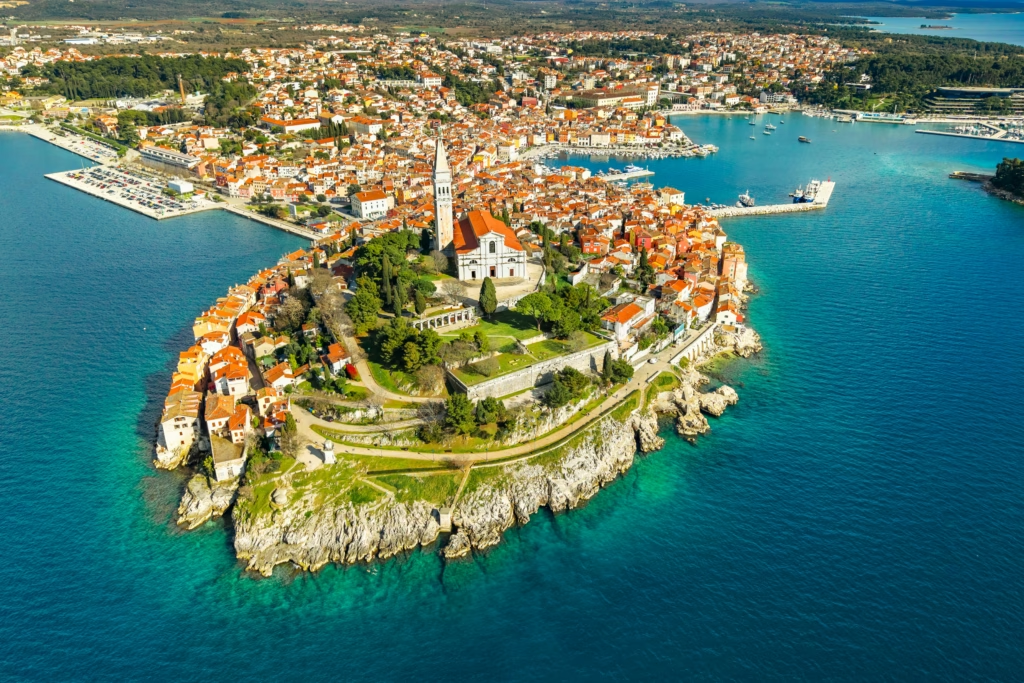
Croatia scatters more than a thousand islands along one of the easiest coastlines in the Mediterranean to sail: warm, tideless water, short hops between anchorages, and an old port town or a quiet cove wherever you point the bow. This is the rundown of the islands worth building a week around, from the famous headliners to a few that stay off most maps.
| Island | Known for | Don’t miss |
|---|---|---|
| Hvar | Glamour, nightlife, lavender | The fortress, Carpe Diem, Pakleni coves |
| Korčula | Walled old town, white wine | The old town, Vela Luka swims |
| Vis | Remote, unspoiled, ex-military | Komiža, the Blue Cave |
| Mljet | National park, saltwater lakes | Polače bay, the lakes |
| Brač | Beaches and hiking | Zlatni Rat, Vidova Gora |
| Šolta | Slow, quiet, close to Split | Maslinica, olive-oil tasting |
| Lastovo | Remote nature park, dark skies | Stargazing, quiet anchorages |
| Dubrovnik (Elafiti Islands) | Car-free islands off Dubrovnik | Šipan, Lopud, Koločep |
The Islands, One by One
Hvar
Hvar is the coast’s glamour island: turquoise coves, lavender fields and the loudest nightlife on the Adriatic. Tie up under the 16th-century fortress in Hvar Town, and if you want a quiet night, slip across to the Pakleni Islands.

Korčula
Walled and medieval, Korčula is often called Little Dubrovnik, and it claims Marco Polo as a son. Wander the old town’s herringbone lanes, cycle the vineyards for its crisp white wines, and anchor near Vela Luka for a quiet swim.

Vis
The furthest of the main islands, and for many sailors the most beautiful. A military base until the 1990s, it stayed unspoiled. Eat fresh fish on the Komiža waterfront and take a morning trip to the Blue Cave on nearby Biševo.
Mljet
Half of Mljet is a national park built around two saltwater lakes. Rent a bike or a kayak, hike the pine forest, and anchor in Polače, one of the safest and stillest bays in the Adriatic.
Brač
Brač does a bit of everything: beaches, hiking and lively towns. Its star is Zlatni Rat, the shifting golden-horn spit that is one of Europe’s most photographed beaches. Base in Bol and hike Vidova Gora for the view.
Šolta
Just off Split and often overlooked, Šolta is all slow living: quiet bays, stone villages and olive groves. Maslinica is the pretty marina town, and an olive-oil tasting is the local ritual.
Lastovo
Remote and protected, Lastovo is a nature park with some of the darkest skies in the Adriatic. Dive the clear water, anchor in a secluded bay, and stock up before you go, because shops are few.
Dubrovnik (Elafiti Islands)
Dubrovnik’s walled city is the headline, but the nearby Elafiti Islands are the escape. Sail to Šipan, Lopud or Koločep for calm anchorages, car-free lanes and small tavernas.

Plan the Trip
String them into a route. Not sure how to link the islands together? We have mapped three full weeks, including the classic Split loop through Brač, Hvar and Vis, in our 3 one-week Croatia sailing itineraries.
Pick your month. May, June and September are the sweet spot: warm water, fewer boats, easier marinas. Our month-by-month guide breaks down the whole season.
Go quieter. Want the islands the crowds miss? Silba, Susak, Šćedro and the Kornati barely register on the tourist maps: see the hidden gems of the Croatian islands.
Know the budget and the rules. Our charter cost breakdown and Croatia licence guide cover what a week costs and whether you need a skipper.
Eating Your Way Round the Islands
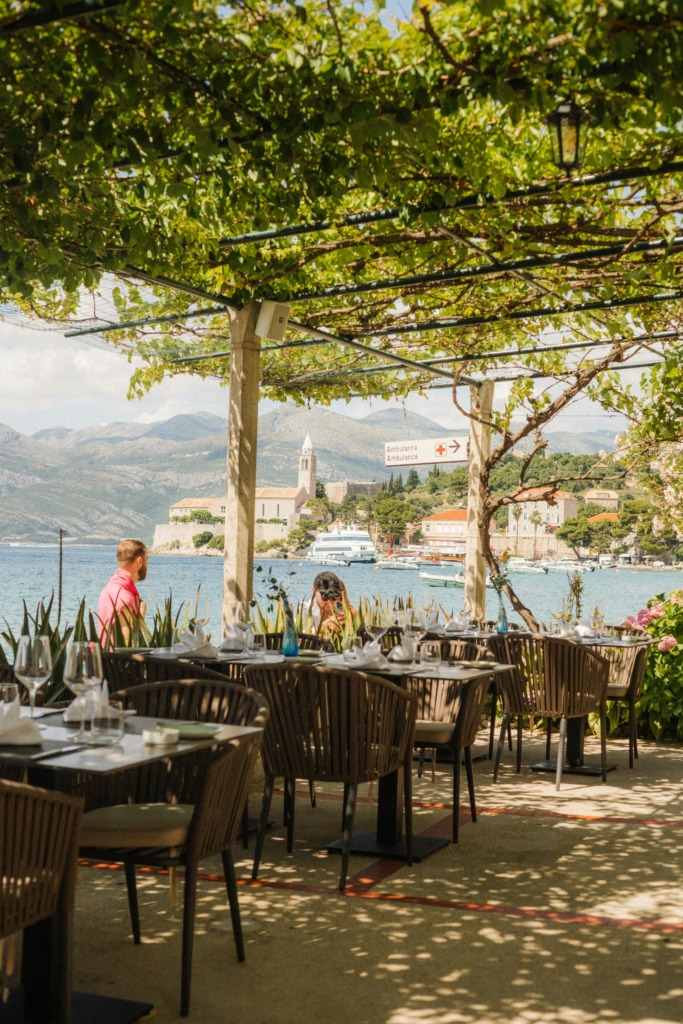
Island food is half the trip. Look for grilled fish straight off the boat, octopus or lamb slow-cooked under a peka lid, and scampi in a garlicky buzara. Hit the morning green markets in towns like Hvar and Vis for produce, eat at the konobas tucked into quiet coves, and take an olive-oil tasting or a vineyard tour on Šolta, Brač or Korčula. Time a stop around a local feast day and you will eat even better.
Best Croatian Islands FAQs
What are the best islands in Croatia for sailing?
The best islands for sailing are Hvar (lavender and nightlife), Vis (remote and historic), Korčula (Marco Polo’s home), Brač (Zlatni Rat beach), Mljet (national-park forest) and the Kornati archipelago. Each pairs well with a 7-day charter from Split or Šibenik.
How many days do I need to see Croatia’s best islands?
Plan 7 days for the highlights: Hvar, Vis, Korčula and Brač fit into one week from Split. Add 3 to 4 days for Mljet and Lastovo if you start in Dubrovnik. The Kornati alone deserve 3 to 5 days. Two weeks lets you cover both ends of the coast.
Which Croatian island is best for first-time visitors?
Hvar is the easiest first stop: regular catamarans from Split, a UNESCO old town, restaurants, beaches and famous nightlife. Brač (Zlatni Rat) and Korčula come next. Vis and Mljet suit visitors who prefer remote anchorages to busy harbours.
Can I visit Croatia’s best islands without a boat?
You can reach most of them without a boat: ferries and fast catamarans run from Split, Zadar and Dubrovnik to Hvar, Brač, Vis, Korčula and Mljet. A charter yacht is faster and reaches bays no ferry serves, but a ferry-and-stay week works for first-timers.
What is the most beautiful island in Croatia?
Many sailors name Vis: 25 nautical miles offshore, no resort sprawl, Stiniva Cove, the Blue Cave and Komiža’s quiet harbour. Mljet’s national park is a close second for anyone who prefers forest and lakes to coastal towns.
Ready to go? Browse boats in Croatia and start planning your island-hopping week.
String them into a route: See 3 one-week Croatia sailing itineraries and the Croatia sailing guide.