
Planning a sailing vacation in the Ionian Sea? You’re in the right place. The islands off Greece’s western coast have been considered the most relaxed charter ground in the Mediterranean for decades. Short daily passages, reliable afternoon winds, clear water and protected anchorages almost everywhere. A cruising area that works whether this is your first bareboat charter or you’ve spent twenty summers on your own keel.
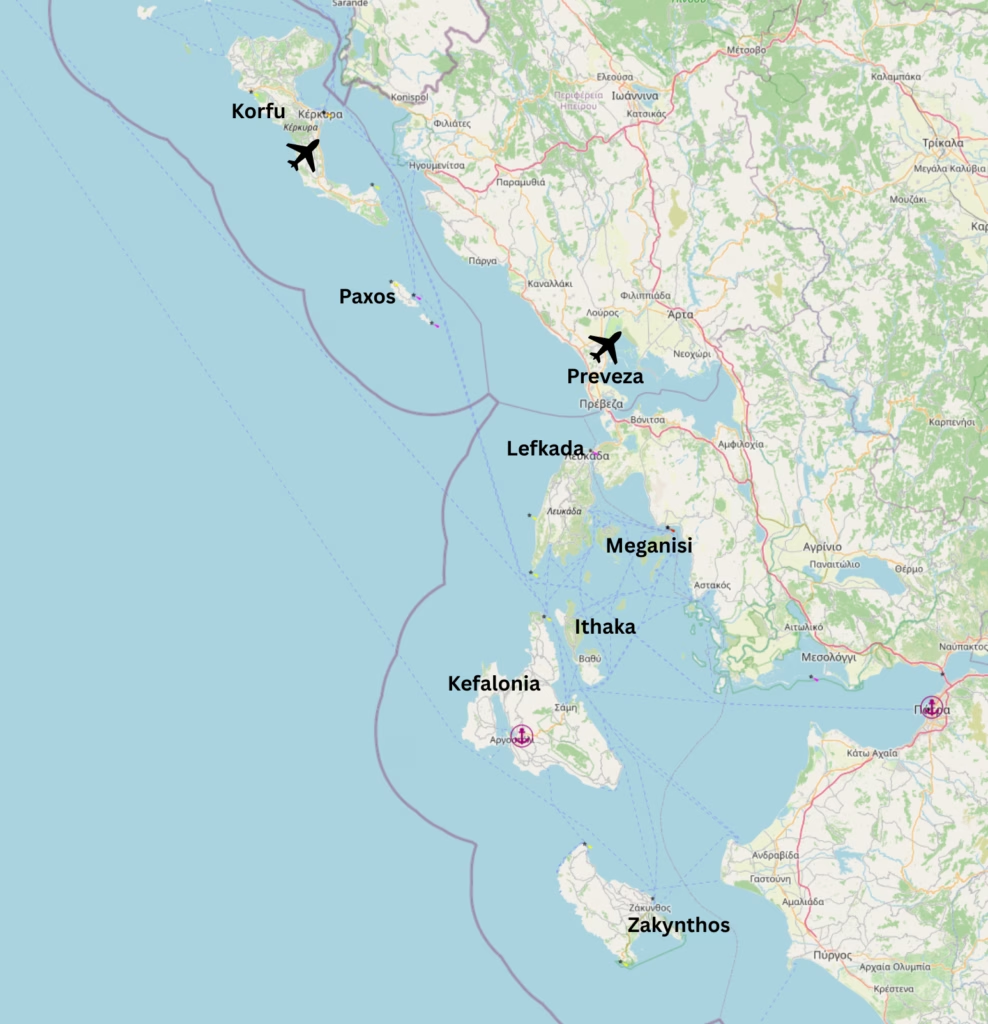
This Ionian Sea Sailing Guide is built as a complete toolkit: the best time of year, the main charter ports around Corfu, Lefkada and Preveza, the best islands and bays, plus two detailed itineraries (a classic 7-day round trip from Lefkada and a 14-day grand tour from Corfu south and back) and practical tips on weather, navigation, costs and choosing the right yacht.
Why the Ionian Sea?
The Ionian Sea is to Mediterranean sailors what the Bahamas is to Caribbean charterers: the easy cruising ground where you feel at home from day one. Distances between islands typically run 10 to 25 nautical miles, or two to five hours of sailing. You can have a relaxed breakfast at anchor, sail off around lunchtime, drop the hook in a sheltered bay by late afternoon, and end the day with Greek wine in a taverna ashore.
Compared to the Aegean, you’re sheltered here from the notorious Meltemi gales. The typical summer wind is the Maistro, blowing from the northwest and building up only by midday. Mornings are often calm. Afternoons bring a steady 12 to 20 knots, sometimes up to 25, almost never more. Exactly the conditions that keep a charter relaxed while still putting decent wind in the sails.
The landscape is part of the appeal: high green mountains on Lefkada and Kefalonia, white cliffs on Antipaxos, long sandy beaches on Zakynthos, small fishing villages with blue and white boats, ancient olive groves running down to the water. The region is one of the most heavily forested parts of Greece, in stark contrast to the dry, sun-baked Cyclades further east.
And finally, the infrastructure. With over 1,400 yachts available across the Ionian Islands, this is the largest charter selection in Greece. The marinas in Gouvia, Lefkas Town and Preveza are known among charterers worldwide and have everything you need: fuel docks, supermarkets, repair facilities, English-speaking handovers.
Best time of year to sail the Ionian Sea
The sailing season in the Ionian Sea runs from early April to the end of October. Which weeks suit you best depends on how much company you can tolerate and how warm you want the water.
April and May are often overlooked. The water is still around 18 to 20 °C, but the islands are green, wildflowers are out, the tavernas are open, and you share the bays with a handful of other yachts instead of a hundred. Air temperatures sit between 20 and 25 °C during the day, with cool nights. Charter prices run 30 to 40 percent below high season.
June is the sweet spot for many charterers. Water temperature is just under 23 °C, air temperature around 28 °C, the Maistro fills in like clockwork at midday, and the islands aren’t yet packed. German and most European school holidays haven’t started, which makes a noticeable difference at the popular anchorages and in the tavernas.
July and August are high season. The bays fill up, and at places like Vathi on Ithaca or Fiskardo on Kefalonia you’ll have to compete for berths in the late afternoon. Water at 25 °C, air often above 30 °C, the Maistro can build to 25 knots in the afternoon. Families tied to school calendars need to book early, ideally between November and February of the previous year.
September is the quiet favorite of many regular charterers. Water is at its annual peak, the main wave of tourists has gone home, the wind is steady, and the evening light turns golden. Anyone with flexibility should look at the second half of September seriously.
October still works in the first half, then the days shorten, tavernas start closing in batches, and the weather becomes unpredictable. A good month for skippers who want quiet harbors and don’t mind the empty berths.
| Month | Water | Air (day) | Wind | Charter prices | Best for |
|---|---|---|---|---|---|
| April and May | 18 to 20 °C | 20 to 25 °C | unsettled, often light | 30 to 40 % below high season | Budget travelers, empty bays, blooming islands |
| June | approx. 23 °C | approx. 28 °C | Maistro fills in reliably at midday | mid | Best balance of weather, calm and wind |
| July and August | approx. 25 °C | often over 30 °C | Maistro strong, up to 25 knots | High season, top prices | Families with school-age kids, largest yacht selection |
| September | 25 to 26 °C (annual peak) | 25 to 28 °C | Maistro still steady | mid, falling | Experienced charterers, golden evening light |
| October | 22 to 24 °C, falling | 20 to 25 °C | unsettled, occasional low | low | Quiet seekers, empty harbors, shorter days |
Climate, charter prices and seasonal character of the Ionian Sea at a glance. Values are averages for the southern Ionian Islands (Lefkada, Kefalonia, Ithaca).
Bareboat, skipper or crewed: which charter type fits you?
In the Ionian Sea you have three options for chartering a yacht. Most guests choose bareboat because the cruising ground is forgiving enough that crews with moderate experience handle it well.
Bareboat charter means you sail the boat yourself. You’ll need a recognized boating license such as RYA Day Skipper, ASA equivalent, or an International Certificate of Competence (ICC), plus a VHF radio license (SRC). Greek authorities also require a second crew member with a valid sailing license as co-skipper. With a bareboat yacht you have full freedom: plan your own route, anchor where you like, set your day’s pace as you go. Bareboat is the cheapest option by a clear margin. A 40-foot sailing yacht starts around €2,200 per week off-season and €3,500 in high season.
Charter with a skipper is the right call if you don’t have a suitable license or if you want to focus on the experience without dealing with navigation and maneuvers yourself. The skipper brings local knowledge: the best anchorages, the right time of day to come into a harbor, the best tavernas. You book the yacht plus roughly €180 to €220 per day for the skipper. Provisioning and a berth for the skipper are usually arranged on top.
Crewed charter with a skipper, cook, and sometimes a hostess is the premium option. You’re a guest from start to finish: breakfast on deck in the morning, fresh fish at midday, and the skipper picks the most beautiful bay for the evening. This is the right choice for special occasions or for families with small children where the parents want to switch off too. Crewed yachts start around €7,000 per week and go up from there depending on size and comfort level.
For most readers, bareboat is the right choice. Anyone unsure whether their experience is enough can simply book a skipper for the first day or two, who hands the boat over once the crew has settled in. That arrangement usually costs only a small premium and takes the pressure off the first 48 hours.
The main charter ports of the Ionian Sea
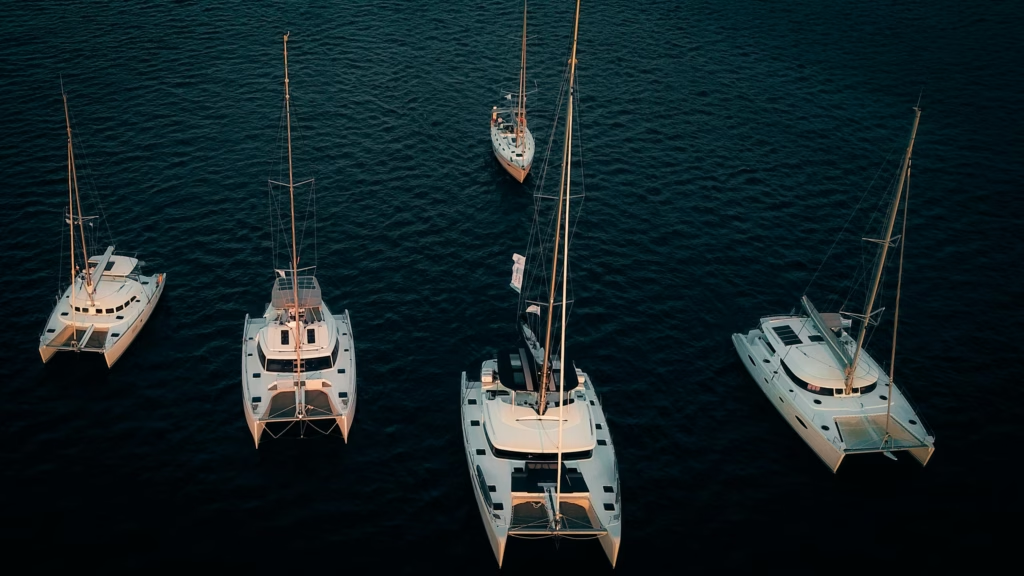
Four port towns share the bulk of the charter fleet. Which one you pick as your starting point shapes your itinerary more than any other decision.
Corfu (Marina Gouvia)
Corfu is the northernmost charter base in the Ionian Sea and also the one with the best flight connections. Corfu Airport (CFU) is served by direct flights from London, Manchester, Edinburgh, Dublin and most major European cities. Marina Gouvia sits about 15 minutes north of the old town and is the largest marina in Greece.
From Gouvia you can reach the Albanian coast in two hours and Paxos in five to six hours. A 7-day charter from Corfu typically stays in the northern half of the cruising ground. With 14 days you can cover the whole south down to Kefalonia or even Zakynthos. The bareboat selection is broad, from small Bavaria 34s to Lagoon 50 catamarans.
Lefkas Town (Lefkada)
Lefkas Town is by a clear margin the largest charter base in Greece. Over 750 yachts berth here across several marinas and quays right next to each other. Anyone who wants choice, who’s looking for a specific yacht model, or who needs a last-minute charter, will find the most options in Lefkas.
Most arrivals come via Preveza-Aktion Airport (PVK), 30 minutes from Lefkas Town by taxi or rental car. Lefkada itself is an island, but it’s connected to the mainland by a floating bridge. You essentially drive onto an island that doesn’t feel like one.
Lefkas Town sits more or less in the middle of the southern Ionian Sea geographically. Whether you head south toward Meganisi and Kefalonia or north toward Paxos and Corfu, you’re always quickly into the cruising ground. That’s what makes Lefkas the first choice for 7-day round trips.
Preveza
Preveza on the mainland is the underrated alternative to Lefkas. Right next to the airport, often cheaper on berth fees, and with somewhat less charter traffic. From here you sail two to three hours to Lefkas and join the classic southern Ionian loop.
If you fly in early from London or anywhere in northern Europe and your yacht is in Preveza, you can be off the dock the same afternoon. The marina itself is modest, but right around the corner sits the pretty town of Preveza with excellent tavernas where fresh fish hits the table at fair prices.
Kefalonia (Sami and Argostoli)
Kefalonia is the smallest of the three main bases, but it has one advantage: you’re right in the middle of the most beautiful part of the cruising ground from the start. Sami sits directly across from Ithaca, while Argostoli on the western side opens the way to Zakynthos. The charter selection is limited, but competition for the best anchorages is also lower.
Kefalonia works particularly well for one-way trips, say Kefalonia to Corfu, or for crews who want to experience the quieter side of the Ionian Sea on purpose.
Top islands and bays you can’t miss
The Ionian Sea has seven main islands and countless smaller ones. These belong on every itinerary.
Paxos and Antipaxos
Paxos is the smallest of the seven main Ionian islands and one of the most charming. The harbor town of Gaios with its pastel-colored row houses looks like a Venetian postcard. Lakka in the north has a sheltered round bay where you’ll usually find an anchor spot even in high season. Antipaxos directly to the south is famous for the Voutoumi Bay and the Vrika Bay: two long sandy beaches with water in a turquoise you rarely see elsewhere in the Mediterranean. Both bays fill up during the day with excursion boats from Paxos. Anyone who anchors there overnight has them almost to themselves after 6 PM.
Meganisi
The small island south of Lefkada is a favorite of many experienced skippers. Spilia Bay below the village of Spartochori has a mooring service through the tavernas on shore: you don’t anchor yourself, you tie to a buoy and head up to the village for dinner. The climb up the old stone steps is part of the experience. Vathi on the other side is noticeably quieter, with a long quay and several tavernas right on the water.
Skorpios
The former Onassis island is privately owned today and you can’t go ashore. But you can anchor in the bays on the northwest side, swim, and take in the island’s strange beauty. In summer, excursion boats pass by regularly with stories about the island and the Onassis family.
Ithaca
Ithaca, the home island of Odysseus, is one of the most beautiful islands in the Ionian Sea. The main town of Vathi sits at the end of a long, narrow bay and ranks among the classic overnight stops on any southern Ionian itinerary. Kioni in the northeast is a tiny harbor village where yachts moor stern-to and tavernas sit right in front of your bow. Frikes nearby is a quieter alternative.
Kefalonia
Fiskardo on the northern tip of Kefalonia is one of the prettiest harbors in the Mediterranean, because the 1953 earthquake happened to spare this corner of the island and the old Venetian houses stayed standing. The harbor is small and busy on summer evenings. Anyone who prefers quiet anchors in Foki Bay just around the corner. Agia Effimia on the east coast is another quieter alternative with a long quay.
Zakynthos
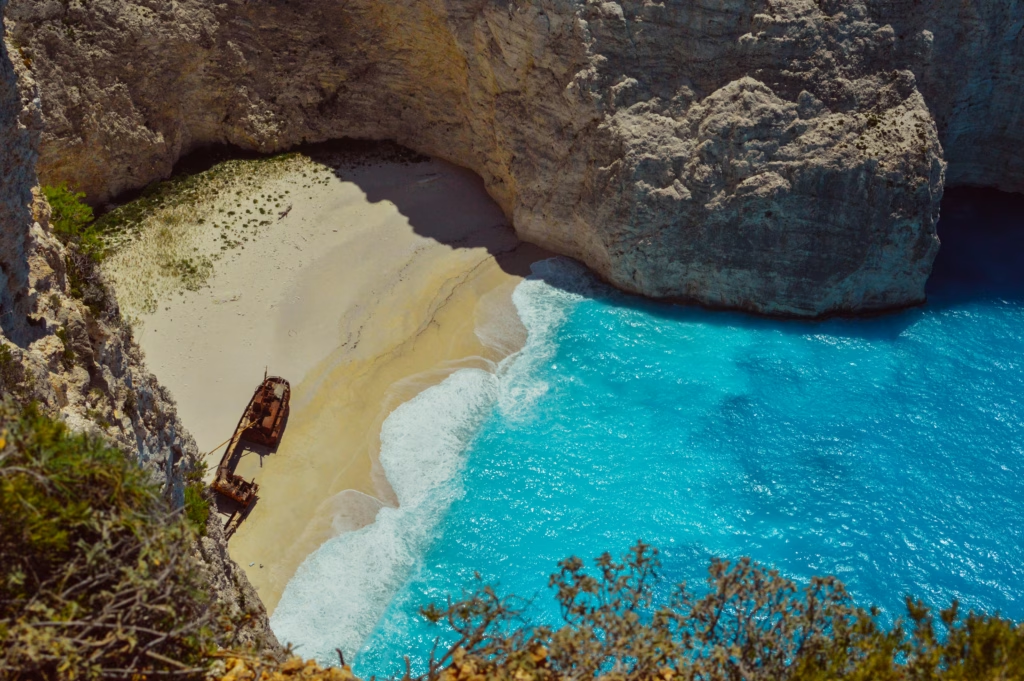
Zakynthos is the southernmost of the Ionian islands and home to the famous Shipwreck Bay (Navagio Beach). The bay itself is reachable only by boat and sits on the bucket list of many Mediterranean sailors. In high summer it’s hopelessly crowded with excursion boats, so go either early in the morning or late in the evening. The west coast of Zakynthos has many more caves and cliffs that look more impressive from the water than from land.
7-day Ionian sailing itinerary from Lefkada: the classic southern loop
This route is the classic. It takes you through the most beautiful islands of the southern Ionian Sea in one week. Daily legs run between 12 and 22 nautical miles, or three to five hours under sail or engine. The route is doable for inexperienced crews, and anyone who books a skipper can run it as a sailing beginner.
Day 1: Arrival in Lefkas Town
Yacht handover is usually Saturday afternoon, but with many providers Friday is also possible. The Friday check-in is worth it because you’ll cast off Saturday before everyone else and find the prettiest bays emptier. Plan two to three hours for the handover: boat check, crew briefing, provisioning for the first days. Spend the night in the marina, eat at one of the harbor tavernas, and get familiar with the yacht.
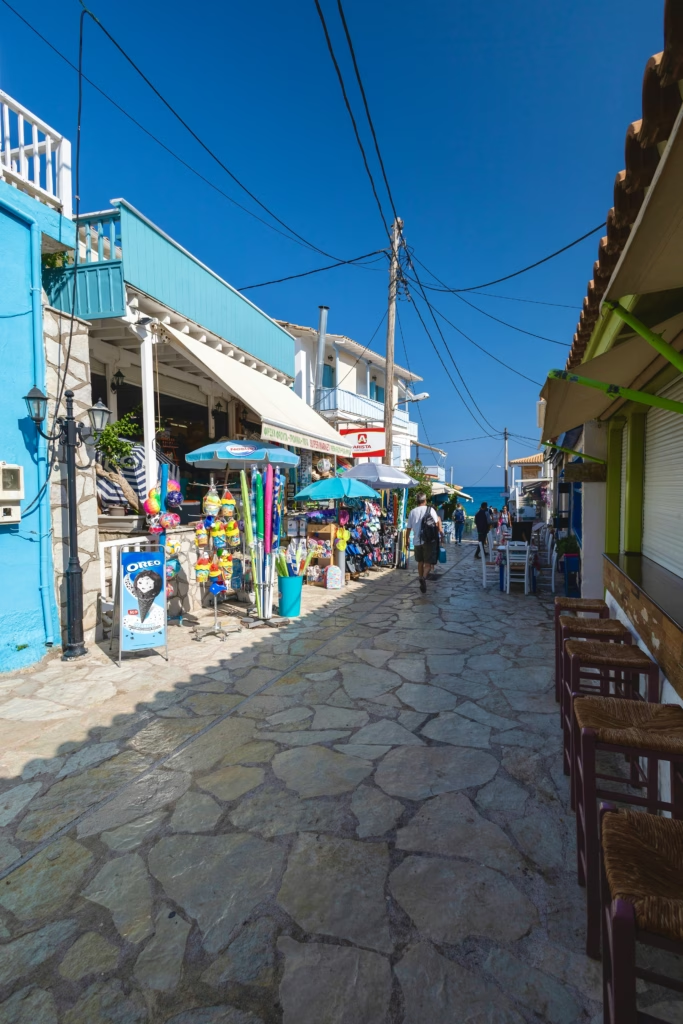
Day 2: Lefkas to Spartochori (Meganisi)
About 12 nautical miles south through the Lefkas Canal. The bridge opens on the hour, factor that into your departure time. After the canal, continue through Vlichos Bay and past Skorpios. Lunch stop in one of the bays on the northwest side of Meganisi, swimming, snorkeling. Late afternoon onward to Spilia Bay below Spartochori. Mooring through the taverna. Evening climb up to the village, fresh fish, Greek wine, sunset over Lefkada.
Day 3: Meganisi to Vathi (Ithaca)
About 18 nautical miles south, past Kalamos and Kastos, both of which have their own overnight bays if you have time for a stop. The entrance to Vathi is classic Ionian: a narrow bay that suddenly opens into a large, sheltered body of water with the main town at the far end. Stern-to mooring at the quay, evening stroll through the small lanes, dinner at one of the harbor tavernas.
Day 4: Vathi to Fiskardo (Kefalonia)
About 14 nautical miles south, along the western coast of Ithaca. Fiskardo gets tight, especially in high season. Try to arrive by 4 PM, otherwise a berth becomes difficult. Alternative: anchor in Foki Bay just around the corner and dinghy in for dinner. Fiskardo in the evening with its lights, small boutiques and tavernas right in front of the bow is one of those harbors you’ll still remember in ten years.
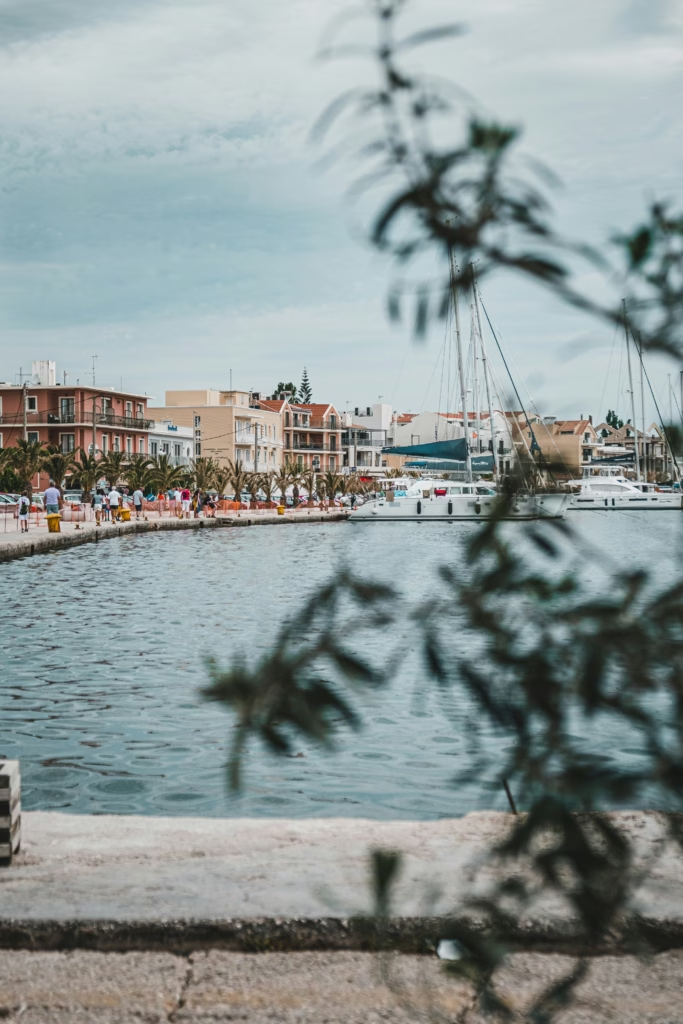
Day 5: Fiskardo to Sivota (Lefkada)
About 22 nautical miles back north. The wind often shifts onto a broad reach, which makes today one of the prettiest sailing legs of the week. Sivota on the south side of Lefkada sits in a nearly enclosed bay that feels like a natural pool. Several tavernas on the water, calm anchor field, a good evening to relax.
Day 6: Sivota to Kioni (Ithaca) or Mongonisi
If you’re running the route in 7 days, today you have a choice: head back to Ithaca and try the tiny Kioni instead of Vathi, or take a quiet day at Mongonisi on the southern side of Paxos if you want to make a quick run north. Both options sit roughly 18 nautical miles away. Kioni has the advantage of putting you in a tiny harbor with only a handful of yachts, with village life happening right outside the cockpit.
Day 7: Return to Lefkas
About 15 nautical miles back to Lefkas Town. The last sailing day, one to enjoy on purpose. A final lunch stop in a bay, then a relaxed sail back. Arrival in the afternoon, fuel up, clean the boat below, hand back the next morning or the same evening.
Total distance: about 100 nautical miles over 6 sailing days, 14 to 18 nautical miles per day on average. A relaxed week’s dose. Anyone who wants to push more can stretch individual legs or add a side trip to Paxos.
14-day Ionian sailing itinerary: the grand tour from Corfu to Lefkada and back
For two weeks, the right move is to cover the whole cruising ground. This route starts in Corfu, runs south to Kefalonia or Zakynthos in week one, and returns north in week two via different legs so you don’t see the same bay twice.
Week 1: From Corfu south
Day 1: Arrival in Gouvia (Corfu)
Travel and yacht handover at Marina Gouvia. First dinner at a taverna in Corfu Town or at the marina itself. The Old Town of Corfu with its Venetian fortress is worth a short visit.
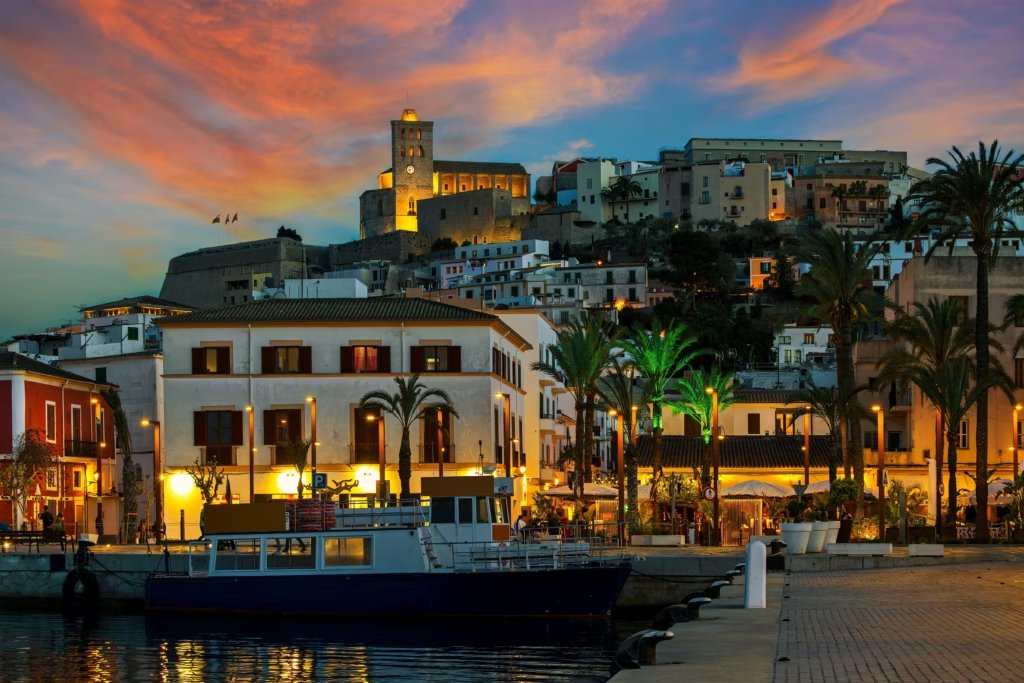
Day 2: Corfu to Lakka (Paxos)
About 30 nautical miles south. With a northwest wind, this turns into a beautiful broad-reach passage. Lakka on the northwest side of Paxos sits in an almost circular bay. Anchor on sand bottom, several tavernas on the beach, this is the pure Ionian feeling.
Day 3: Paxos to Antipaxos and on to Mongonisi or Gaios
Short distance. Morning to Antipaxos, anchor in Voutoumi Bay, swim, lunch onward to Gaios, the main town of Paxos. Mooring in the Venetian harbor inlet. Anyone looking for quieter overnights goes to Mongonisi Bay on the southern side.
Day 4: Paxos to Preveza or Parga
About 25 nautical miles toward the southern mainland. Parga is a pretty tourist town with a long sandy beach and a Venetian fortress. Anyone who prefers to sit close to charter infrastructure heads for Preveza. Preveza has the advantage of a real harbor with a fuel dock and supermarket.
Day 5: Preveza through the Lefkas Canal to Lefkas Town or Vlichos
About 15 nautical miles. The Lefkas Canal with its swing bridge is a small event in itself: you wait with other yachts for the bridge opening, then chug through together. Overnight in Lefkas Town for the buzz, or push on to the quieter Vlichos Bay.
Day 6: Lefkas to Spartochori (Meganisi) and on south
About 18 nautical miles. Lunch stop at Spilia Bay below Spartochori. Climb up to the village for lunch or for a swim. Afternoon onward to Vathi on Ithaca, or directly into one of the bays on the western side of Ithaca.
Day 7: Ithaca to Fiskardo (Kefalonia)
About 14 nautical miles. Fiskardo for the second time on this trip, this time with more time to enjoy it. Anyone who didn’t swim in Foki Bay yet does it now. Overnight in the marina or in Foki Bay.
Week 2: Back to Corfu by a different route
Day 8: Fiskardo to Sami (Kefalonia) or Agia Effimia
Short leg, about 10 nautical miles. Sami is on the east coast of Kefalonia directly across from Ithaca. From here you can take a rental car to the famous Drogarati Cave and the Melissani Lake. Both rank among the most striking natural features of the Ionian Sea.
Day 9: Kefalonia to Vasiliki (Lefkada south)
About 18 nautical miles north. Vasiliki at the southern tip of Lefkada is famous among windsurfers and kitesurfers because of the reliable afternoon winds. Anchor in the bay off the beach, dinner at one of the beach tavernas in the evening.
Day 10: Vasiliki to Sivota (Lefkada)
A short, easy leg of about 8 nautical miles. Sivota is best explored on foot: small bay, one circuit takes an hour, several good tavernas on the water.
Day 11: Sivota to Kalamos or Kastos
About 12 nautical miles east. Kalamos and Kastos are two small islands where time has stood still. Few houses, few tavernas, a lot of silence. The right day for crews who need a break from the buzz at this point.
Day 12: Kalamos back north, Lefkas Canal, Preveza
About 25 nautical miles. Today you cover ground. Through the Lefkas Canal heading north, overnight in Preveza. Anyone wanting to push further runs for one of the bays on the mainland coast toward Parga.
Day 13: Preveza to Parga and on to Mourtos (mainland Sivota)
About 20 nautical miles. Parga is worth a stop for its pretty old town. Overnight in Mourtos, sometimes called Sivota Mourtos, a small harbor on the mainland across from Corfu.
Day 14: Mourtos back to Gouvia (Corfu)
About 25 nautical miles. Last sailing day, often with good wind from the north or northwest. Arrival in Gouvia in the afternoon, fuel up, clean the boat below, hand back.
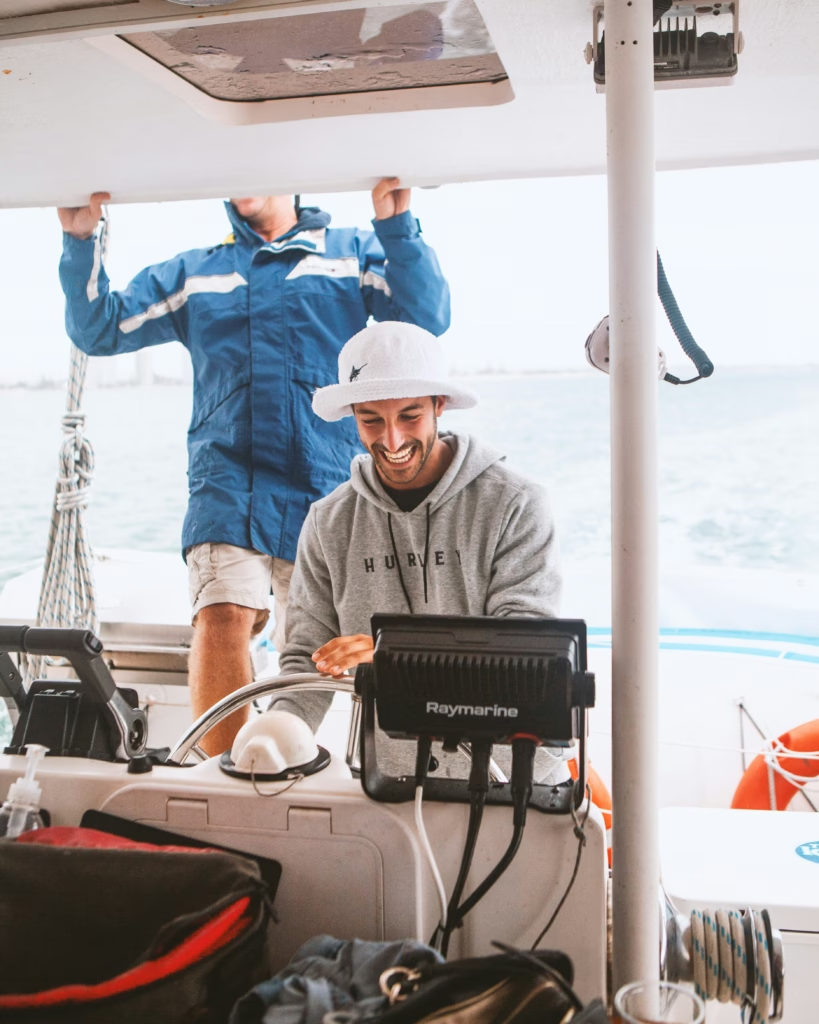
Total distance for 14 days: about 220 nautical miles over 13 sailing days, an average of 17 nautical miles per day. You see all three main island groups (Corfu and Paxos in the north, Lefkada through Kefalonia in the middle, optional Zakynthos in the south) and come back after two weeks genuinely rested.
Practical tips for sailing the Ionian Sea
Understanding weather and wind
The Maistro is the summer wind you work with. It comes from the northwest, builds up by midday, and dies after sunset. Mornings often have a calm, good for motoring or for breakfast at anchor. Afternoons run 12 to 20 knots, with peaks to 25, almost never more.
In the Lefkas Canal area, local funnel effects can develop that you won’t see on a general weather app. At your handover, ask about local wind quirks and the best weather app to use. The standard recommendation is Windy (with the ICON-EU model for the region) plus the Poseidon System app for the eastern Mediterranean.
Thunderstorms are rare in summer, but they do happen in spring and fall. If you see towers building over the mountains of Kefalonia in the afternoon, plan your anchorage conservatively.
Navigation and anchorages
Depths in the Ionian Sea are noticeably greater than in the Adriatic. Anchoring directly off the beach only works in a few spots; usually you’ll be hanging on a mooring buoy in 8 to 15 meters of water, or anchoring in deeper water and running shore lines.
Mooring in harbors is almost always stern-to, meaning Mediterranean-style with your own anchor at the bow or with a slime line from the quay. Always plan for the wind: an onshore tail wind during the maneuver makes things tricky fast. At handover, ask whether the operator has bow and stern thrusters fitted; that makes maneuvers significantly more relaxed for less experienced crews.
At many quays, especially Vathi (Ithaca), Fiskardo, Kioni and Sivota, there’s a mooring service these days. The berth attendant comes out in a tender, helps with the lines, and collects €25 to €50 in berth fees in the evening.
Tavernas and provisioning
You’ll find fresh provisions in the larger ports: Lefkas Town, Corfu, Preveza, Argostoli all have supermarkets right at the harbor or within walking distance. In small bays you’ll typically find only a mini-market with the basics. So plan your weekly shop for the first day and pick up only bread, fruit, and fresh fish along the way.
A simple rule applies in the tavernas: the closer the yachts sit to the quay, the higher the prices. The ouzo level and fish quality at a bay on Kalamos are often better than in Fiskardo, and at half the price.
What does a sailing trip cost?
Rough budget for one week in June with a 40-foot sailing yacht for four people:
- Bareboat yacht charter: €2,500 to €3,500 per week
- Diesel: €200 to €350 depending on motor time
- Berth fees: €150 to €250 per week
- End cleaning: €150 to €250 (often included in the charter price)
- Provisioning on board: €250 to €400 per person
- Eating out at tavernas: €200 to €350 per person
- Skipper if booked: €1,250 to €1,500 per week
- Flights from northern Europe: €200 to €600 per person depending on season
Per person, that comes to €1,200 to €1,800 for a week, all in. In high season July and August, charter prices climb 30 to 50 percent. In off-season April and May or October, you often save 30 percent compared to June.
What to pack on board
- Deck shoes with soft soles (no black soles, they leave streaks on deck)
- Sun protection: hat, polarized sunglasses, SPF 50 sunscreen, long-sleeved UV shirt
- A warm layer for the evenings; even in summer it can get cool after sunset
- Foul weather gear if you’re sailing in April, May or October
- Snorkel set, the payoff for that one is huge in the Ionian Sea
- A small dry bag for phone and wallet during dinghy runs
- Cash in small bills, many tavernas and mooring attendants don’t take cards
Frequently Asked Questions: Ionian Sea Sailing
What’s the best Ionian Sea sailing route?
The best Ionian Sea sailing route is a 7-day loop from Lefkada: Lefkada Town to Meganisi, then Ithaca, Kefalonia (Fiskardo and Argostoli), Paxos and back. Hops are 8-15 nautical miles, anchorages are sheltered, and the route covers the most-loved islands of the Ionian without rushing.
How long does a sailing trip in the Ionian Sea take?
A sailing trip in the Ionian Sea takes 7 days for a classic loop, 10-14 days to include Corfu and Paxos in the north plus Zakynthos in the south. Most charters book 7 days because flights into Preveza or Kefalonia airports limit longer turnarounds. Add a rest day to your plan.
What’s the wind like for Ionian Sea sailing?
Wind in the Ionian Sea is gentle compared to the Cyclades. A thermal sea breeze (maistro) blows from the NW at 10-18 knots most afternoons June-September. Mornings are usually calm. The meltemi does not reach the Ionian, which is why this region suits new sailors and families.
Where do I start an Ionian Sea sailing charter?
You start an Ionian Sea sailing charter at Lefkada Town (the most popular base, fastest access by air), Corfu (Gouvia Marina), Kefalonia (Argostoli) or Preveza. Lefkada has the largest charter fleet, with sailing yachts and catamarans from 38 to 50 feet. Most flights from Europe land in Preveza or Corfu.
Is the Ionian Sea suitable for beginner sailors?
The Ionian Sea is one of the gentlest Mediterranean regions for beginner sailors. Short hops (5-15 nm), sheltered anchorages, predictable afternoon sea breezes, no meltemi, no big tides and abundant tavernas in every harbour make it the gentlest learning ground. Skippered charters are also widely available.
Frequently asked questions
When is the best time of year for a sailing trip in the Ionian Sea?
The main season in the Ionian Sea runs from early May to the end of September. June and September are considered the best months by experienced charterers, because the weather is reliably warm, the Maistro wind fills in dependably at midday, and the bays aren’t yet or no longer overcrowded. July and August are high season with the highest prices and busiest harbors, but with the largest fleet selection. April and October are off-season with significantly lower prices, but cooler water and occasionally unsettled weather.
Do I need a sailing license to charter a yacht in the Ionian Sea?
Yes, for a bareboat charter in the Ionian Sea you need a recognized boating qualification such as RYA Day Skipper, an ASA equivalent, or an International Certificate of Competence (ICC), plus a VHF radio license (SRC). Greek authorities also require a second crew member on board who can show a sailing license (the co-skipper rule). Anyone without the right license books a yacht with a skipper. The skipper brings not only the qualification but also local knowledge that makes the first days noticeably more relaxed.
How much does a sailing yacht charter in the Ionian Sea cost per week?
A 40-foot sailing yacht in bareboat charter costs in the Ionian Sea from about €2,200 per week off-season, and €3,500 to €4,500 in high season July and August. Catamarans run 50 to 80 percent more. Add diesel, berth fees, end cleaning, and provisioning on top. Total per-person costs for one week typically land between €1,000 and €1,800 all in.
Is sailing the Ionian Sea suitable for beginners?
Yes, the Ionian Sea is considered one of the most beginner-friendly cruising grounds in the Mediterranean. Distances between islands are short (typically 10 to 25 nautical miles per day), winds are usually moderate and predictable, bays are sheltered, and there’s safe holding ground everywhere. For crews with limited experience, the recommended approach is to book a skipper for the first one or two days, who breaks in the crew and then hands over the boat.
Should I start my Ionian Sea sailing trip from Corfu or Lefkada?
Lefkas Town is the largest charter base in Greece and sits geographically in the middle of the southern Ionian Sea. From here you can reach the most beautiful islands of the region (Meganisi, Ithaca, Kefalonia) in short daily legs, which makes Lefkas the ideal choice for a 7-day round trip. Corfu sits further north and works better for 10- to 14-day trips, because from here you can also cover the southern cruising ground without doing the same legs over and over. Corfu also has better direct flight connections from northern Europe.
How far apart are the Ionian Islands?
Daily legs in the Ionian Sea typically run between 10 and 25 nautical miles, or two to five hours under sail or engine. Lefkas to Meganisi is just 12 nautical miles, Lefkas to Ithaca about 30. Corfu to Paxos is roughly 35 nautical miles. Anyone wanting a relaxed family vacation plans 12 to 18 nautical miles per day and has plenty of time for lunch stops in one of the many bays.
Which bays and harbors in the Ionian Sea are particularly worth visiting?
The most beautiful harbors and bays in the Ionian Sea include Fiskardo on Kefalonia (with the surviving Venetian houses), Vathi and Kioni on Ithaca, Spartochori on Meganisi (with the climb up to the village), Sivota on Lefkada (a natural harbor), Lakka and Gaios on Paxos, and Voutoumi Bay on Antipaxos. Anyone preferring the quiet end heads for Kalamos or Kastos, two small islands with little tourism.
Popular yacht charter destinations in the Ionian Sea
Yacht charter by boat type in the Ionian Sea
- Sailing yacht charter in the Ionian Islands
- Catamaran charter in the Ionian Islands
- Sailing yacht from Lefkas Town
- Sailing yacht from Gouvia Marina
- Catamaran from Lefkas Town